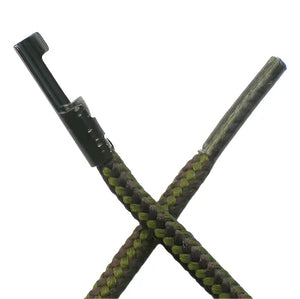
Boot Lace Covert Handcuff Key


To simplify the various conditions New & Used items may have, we created a conditions guide:
Please remember, when buying military surplus, these items were intended to be used heavily under high intensity conditions. Age and amount of use is a HUGE factor in condition. Unless stated otherwise do not expect a perfect pristine item, it will have its flaws. See conditions below.
-
New Condition: new with or without tags, various dates and manufacturers.
-
Good Condition: shows signs of use, light fading/ possible small stains and or small factory repairs. Tags may be legible, may have name tapes and patches sewn on by previous owner. Various dates and manufacturers.
-
Fair Condition: shows signs of use, fading/ small stains or holes/ factory repairs. Tags may be legible, may have name tapes and patches sewn on by previous owner. Various dates and manufacturers.
- Poor Condition: shows signs of heavy use, fading/ stains/ holes/ rips/ major factory repairs. Tags may be legible, may have name tapes and patches sewn on by previous owner. Various dates and manufacturers.
Unless stated otherwise, pictures in product listings are of examples, you will not receive said item unless it is "one of a kind". Items that are one of a kind are ones that we have extremely limited amount, no variations of condition and sold as is.
If you have any questions about if a product is "one of a kind" please contact us before purchasing. Send us an email with the products full title and if possible a picture of the listing. We will get back to you, thanks.
Military surplus comes in a variety of different conditions based the three " W " rule: What, Where, When.
- Depending on what the item is will generally determine the amount of use and what it was used for. This is important because some items do not endure the torture of being in the field for prolonged periods of time, while others might.
- Ex: Dress Uniforms are not worn in combat, therefore generally, there is lighter use than issued combat/working uniforms.
- Knowing where the item most likely was issued/stored will generally determine the environment it was exposed to. This is important because some items are exposed to harsher conditions than others, or are straight from storage.
- Ex: Uniforms & Gear issued in the Vietnam War saw extreme heat and moister, giving those items specific textures/smells/common problems, while the same items issued to troops in occupied Europe do not have those attributes (Generally better conditions).
- Ex: Uniforms & Gear stored in a controlled environment (warehouses or similar areas) feel and smell different than if it is stored in a non-controlled environment (Random areas/outside/or exposed to elements)
- Time is a huge factor, when something was issued generally determines the age of the item. As time goes by everything ages, this is the circle of life and it does apply to inanimate objects, like military surplus. Items will show signs of age, typically tarnished metal/fading/stains/rips/holes/rot/smell. The exception to the rule is NOS ( New old stock) items or ones stored carefully in controlled environments.
- Ex: Uniforms & Gear from World War 2 are generally made of canvas/leather/twill or HBT fabric, and are close to 100 years old. These items have more than likely seen combat or were reissued in the Korean or Vietnam Wars. Extensive use and the fact that they are almost a century old will reflect the condition & price. This applies to any era.
- Ex: Uniforms & Gear from the original factory box, or items stored carefully in controlled environments will generally retain their durability and "new" look. The age of an item sometimes is not a factor BUT only when it is properly stored or carefully looked after.
Any questions? Feel free to contact us!
